Wednesday, 26 November 2014
Introduction to Genre
Genre is used to categorize films to target specific audiences and to use the conventions of the genres to advertise specifically.
Some examples of film genres are Romantic, Horror, Comedy.
Films within each genre share conventions which help to differentiate between the genres. Conventions can be sound. For example, in horror films they could have contrapuntal sound where there is a typical children's nursery rhyme contrasting with the images of violence.
Another convention could be editing. In action films the shot length is short so the shots switch quickly between angles. This increases the pace and adds movement.

Wednesday, 19 November 2014
Editing Preliminary Investigation
 Editing
 In our first editing lesson we learned the basics of Adobe Premiere.
We learned how to make new "bins" and "rushes" to organize the raw footage filmed. we then learned how to place the information onto a timeline and we learned how to use various tools on the program such as Trim Handles, Blade and In / Out Points and how to cut to make a clean continuity edit.
In our second lesson of editing we continued working on cutting and piecing together the footage of the preliminary investigation shoot, ensuring all the sound matched the action and the switching between shots was clean and the continuity worked between shots.
I felt that within our editing group we had a good combination of people as i think members of the group were better than others at different aspects of the editing which made it easier to contribute abilities to do the different tasks. I felt that I was stronger at choosing the angles to use for each shot. I think I need to work on the physical aspect of the piecing together on the timeline of the shots. I think towards the end of the task I improved my skills of the timeline editing but there is definitely room for improvement because I don't think i completely got the hang of it.
Original ideas discussed within my group (Freddy, Claudia, Tom)
Idea 1
A psychopath who was abused as a child and when he was younger he would try and signal to people about his troubles at home. when he grew up he was obviously messed up so and he would stalk children he suspected to be going through the same situation as he did when he was younger, even if they weren't he would try and save them by kidnapping them and keeping them abandoned in a locked cabin in the woods. it was going to be in first person on his behalf so we could see why he was doing it but we knew it was wrong but we empathised with him as he was just trying to help.
Idea 2
We see an extreme close up of a man sweating, looking stressed and nervous, the background is entirely black, the camera switches and we see that he is taking a penalty, he shoots and scores the penalty, there is a fade to black, and cheering is heard, and is synchronous to the fading screen. There is a newspaper on a table with the front page being about the famous penalty shootout and how it won the mans team the cup. We see the player pack his bags, and leave his apartment, he arrives at training to find a figure in the goalposts, he walks up to the figure to find that it is his coach hanging by his neck, with white letters painted on him, saying 'You're Next'.
Idea 3
Man is leading a double life. He is a police officer but has also committed a lot of very bad and serious crimes. He has raped and murdered 3 women in his other life, but 5 years later he is at work and is now investigating the crime as one of the bodies has just been found. Will people find out it was him?
For the opening sequence, I would like to use several clips from different news channels about the 3 girls going missing. The clips would cut from one channel to the next and eventually the sound from the clips would play over each other and then it would cut to black. Next we would see the back of a man dragging some bodies, but we don’t ever see his face. Next it cuts to the policeman at work and we hear a voice over of a news presenter saying that a girl who went missing 5 years ago, body has been found. We see the man at work trying to investigate the incident. An image of a wrist tied to a bed flashes on the screen and then we cut back to the man talking at work. We then see another body revealed with a voice over, it quickly cuts to a woman with hands around her throat. The speed of the cuts get quicker and we see a lot more shots of violent things. Then it cuts straight to black and there is a big bang. Finally we see a man slowly walking towards the camera with his hood up but we cannot see his face.
Tuesday, 11 November 2014
Thriller Genre
Genre
Genre is used to categorize films to target specific audiences and to use the conventions of the genres to advertise specifically.
What are genre conventions ?
 Conventions
of a thriller
Conventions
of a thriller
- A genre= a category that a film can fit under, that shares similar conventions to eachother.
- A sub-genre= a genre within a genre that helps classify the specific themes of that film.
- A hybrid-genre= a combination of different types of genre.
Genre is used to categorize films to target specific audiences and to use the conventions of the genres to advertise specifically.
What are genre conventions ?
- Genre conventions are things which people naturally associate with different types of genre that separate them from one another. They are used to let the audience establish the genre the film they are watching is categorized under so the have more of an idea what to expect from the film.

Thriller:
What is a
thriller genre?
- A thriller is a film genre that includes suspense, tension and excitement.
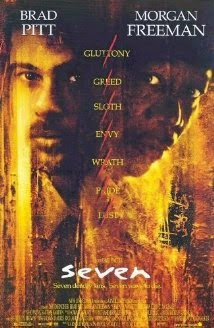
- some examples of thriller films are 'Taken', 'Inception' and 'Se7en'
Conventions
of a thriller
What are
the main conventions of a thriller?
The main convention of a thriller are suspense.
The main convention of a thriller are suspense.
Sub-genres
of thriller?
Give the
different types and include examples of texts within each sub-genre.
Some sub-genres of thriller are psychological, crime, mystery, espionage, conspiracy.
Some sub-genres of thriller are psychological, crime, mystery, espionage, conspiracy.
Thursday, 6 November 2014
Filming Preliminary Investigation
Filming
For the preliminary investigation, in groups, we filmed a basic storyboard scene. we were given five shots which we had to use: wide shot, close up and over the shoulder. we could use any other shots which we thought would be suitable to the sequence and would add more versatility within the sequence. we used a close up of the telephone which the character picks up. we also used some other variations of the over the shoulder shots.we had to consider that when it came to editing we had to have a match on action to convey the continuity within the sequence. we had to use the 180 degree rule, so it was obvious to the audience where the characters were position to one another.
The preliminarily task involved a character opening a door, crossing the room, then the two characters exchange a couple of lines of dialogue.
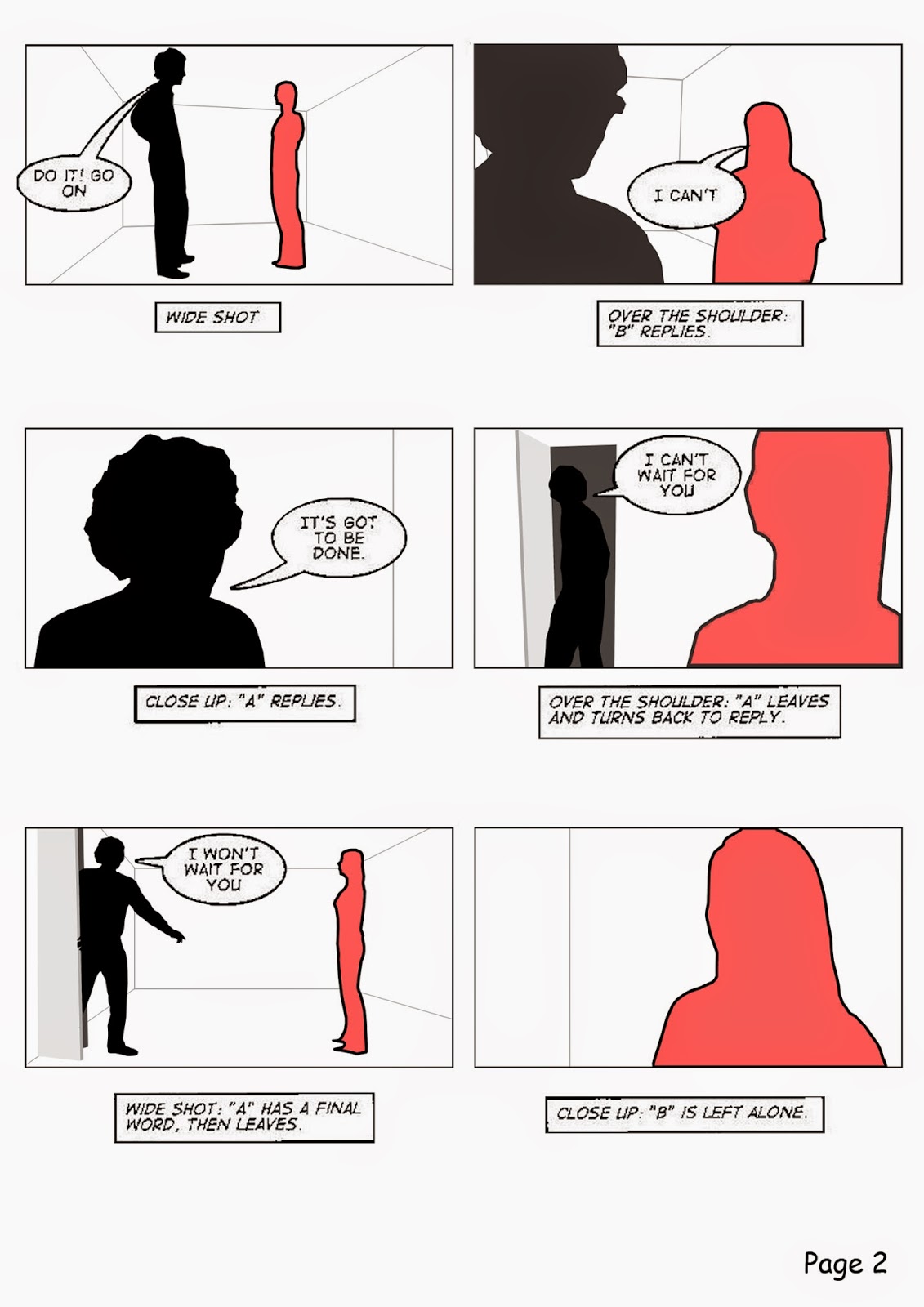 The first shot we used was a wide shot, to set the scene, including the mise-en-scene of a sofa and table. we used the close ups of the two different characters so when it came top editing we could focus on the dialogue and emotion from each character when necessary. We decided to use different variations of over the shoulder shot so when it came to editing, we could have a variation of uses for this type of shot. we used an over the should of the character walking through the door, with only seeing the responding characters face, so we knew where the dialogue was coming from but focused on the other character so er emotion was clear. We used an over the shoulder shot of character 1, including character 2, so we could show the interaction of emotions between the two characters. we did a close up of the telephone so that it was made clear when she picked it up and put it down, so it could make more of an impact and the movement was more purposeful.
 i think, what we could have done better was using more of a variation of more complex shots, so when it came to editing we had a wide variety of different shot to choose from even if we didnt use them they were there. Also we could have done more takes of the same type of shot, so that there were more to choose from if there were any continuity errors.
In our preliminary task, I was the director and I filmed most of the shots. I enjoyed doing this because I could contribute my ideas for which types of shots would work best for each section of the sequence.
Tuesday, 14 October 2014
Sound Textual Analysis-Silence of the Lambs
 At the beginning of the scene and throughout the first half,
there is a clam non-diegetic track of
piano music. This carries on when switching from shots which suggests to the
audience that the different shot are in the same setting, with the same mood. The
calm music is shown when establishing the scene to be in a prison cell which is
contrapuntal to the setting which suggests unease within the scene. The fact
that the music is peaceful when showing the character within the prison cell (who
we assume is the prisoner) paintings, may show that he finds peace within his
painting and drawing. The music also gives quite a sinister atmosphere where
there is calmness in the prisoners mind because he has a plan which he knows
will benefit him.
At the beginning of the scene and throughout the first half,
there is a clam non-diegetic track of
piano music. This carries on when switching from shots which suggests to the
audience that the different shot are in the same setting, with the same mood. The
calm music is shown when establishing the scene to be in a prison cell which is
contrapuntal to the setting which suggests unease within the scene. The fact
that the music is peaceful when showing the character within the prison cell (who
we assume is the prisoner) paintings, may show that he finds peace within his
painting and drawing. The music also gives quite a sinister atmosphere where
there is calmness in the prisoners mind because he has a plan which he knows
will benefit him.
When the other characters enter the scene, there is diegetic
sound of quite purposeful footsteps which interrupts the music, this shows the
authority that the new characters have over the original character in the
scene. This gives the impression that the new two characters are police
officers by their authoritative presence. When the prisoner begins to speak,
the footsteps stop, this could suggest that in fact the prisoner has more of a
dominant personality over the other two as he is instructing and directing them
and affecting their actions. The significant sound of the keys firstly: supports
the previous suggestion of the setting from what we have already seen of the
prisoner in a cell. The noise of the keys and the sound of footsteps suggests
the atmosphere of the cell; any diegetic sound is significant to the prisoner
as he usually only has the sound of what is created by himself and it suggests
that any form of sound that is linked to him having company, is dominant, which
portrays the loneliness within that setting of the prison cell.
The non-diegetic piano music gets louder as the image of the
prisoner is revealed, this shows that this character has a significant presence
within the scene.


When the weapons are
being shown, the non-diegetic music slows down to make a significant change so
the audience has time to look at the weapons and gives time to focus and pay
attention to the items on screen.
The non-diegetic sound increases in pace, which builds tension
for the audience as is shows that something significant is about to happen and
climax the sound. This is abruptly cut off with the closing of the handcuffs. The
same sound was heard earlier in the scene when the officers were securing the
handcuffs of the prisoner but now they vulnerability and authority has switched
places. This gives an abrupt change in dynamic and an un-safe atmosphere to the
scene. This sound is accompanied by a
synchronous non-diegetic sound of sudden low intense music then blended with a screeching
violin sound. This combination of sounds is a convention of the horror genre which
suggests to the audience the possible outcome of this scene.


 The diegetic noise of the crashing of the metal bars of the cell,
completely changes the dynamic and increasing the pace of the scene. Suggesting
that now that the prisoner is dominant and the scene will become more hectic, portraying
the stability of his mind. Which gives an unsettling atmosphere to the audience.
The computer generated diegetic sound effects emphasise all the unpleasant
details of the attack making the audience empathise with the struggling
characters and it also conveys the sub-genre of the film as bloody-horror. Also
the screams of desperation coming from the officers forces the audience to
empathise with the characters in their struggle. Each strike of the beating is
significantly spaced out in a beat to emphasise each brutal strike after one
another.
The diegetic noise of the crashing of the metal bars of the cell,
completely changes the dynamic and increasing the pace of the scene. Suggesting
that now that the prisoner is dominant and the scene will become more hectic, portraying
the stability of his mind. Which gives an unsettling atmosphere to the audience.
The computer generated diegetic sound effects emphasise all the unpleasant
details of the attack making the audience empathise with the struggling
characters and it also conveys the sub-genre of the film as bloody-horror. Also
the screams of desperation coming from the officers forces the audience to
empathise with the characters in their struggle. Each strike of the beating is
significantly spaced out in a beat to emphasise each brutal strike after one
another.
The diegetic noise of the crashing of the metal bars of the cell,
completely changes the dynamic and increasing the pace of the scene. Suggesting
that now that the prisoner is dominant and the scene will become more hectic, portraying
the stability of his mind. Which gives an unsettling atmosphere to the audience.
The computer generated diegetic sound effects emphasise all the unpleasant
details of the attack making the audience empathise with the struggling
characters and it also conveys the sub-genre of the film as bloody-horror. Also
the screams of desperation coming from the officers forces the audience to
empathise with the characters in their struggle. Each strike of the beating is
significantly spaced out in a beat to emphasise each brutal strike after one
another.
The non-diegetic music simmers down after the beatings have
finished to show a completely conquered setting from the prisoner to the
officers. Then the music returns to the calm piano music from the beginning, to
bring the peace back to his state of mind at the beginning of the scene.
Subscribe to:
Posts (Atom)